Tomb raider 1996 was a primary title for the Sega Saturn which used hitachi superH 32bit RISC processors at 28mhz and 2m RAM. A little more digging lists the minimum PC requirements for the DOS/win9x version to be a Pentium 60 and 8m RAM.
Not even counting that overall instructions per clock has increased tremendously since the 90s, yeah, there’s plenty of power in an esp32 at 400mhz lol
The ESP32 seems to even do more MIPS per Mhz that the original Pentium, so it’s even faster than a 400mhz pentium would be. Computationally at least
Edit: apparently the Pentium was actually much faster at 64-bit floating point calculations (ESP32 has to do 2 32-bit operations and combine in software), but I don’t think that’s an issue here
Guess it depends on how tomb raider was written. Even on 32-bit CPUs games like quake were still doing 64-bit math
This reminds me of very early mobile ports of this game for Pocket PC PDAs from 2002.
Allow me to geek out a little: The two least powerful of the officially supported devices - Compaq iPAQ 3630 and Toshiba e310 - feature a 32bit ARM-based RISC CPU clocked at 206 MHz, paired with 32 MB of RAM and a 240 x 320 display. The Toshiba cost $899 when it came out in October of 2002, equivalent to $1661 in today’s money (in other words, way too much for a kid who desperately wanted one back then).
Here’s the interesting part though: This CPU - the Intel StrongARM SA-1110 (yes, Intel used to license ARM CPUs)- has a TDP of less than 400 mW when clocked at 206 MHz. This is without RAM, of course, but still, this was a very power-efficient chip for the time - and it could take up tasks that were usually done by other chips, like acting as a softmodem.


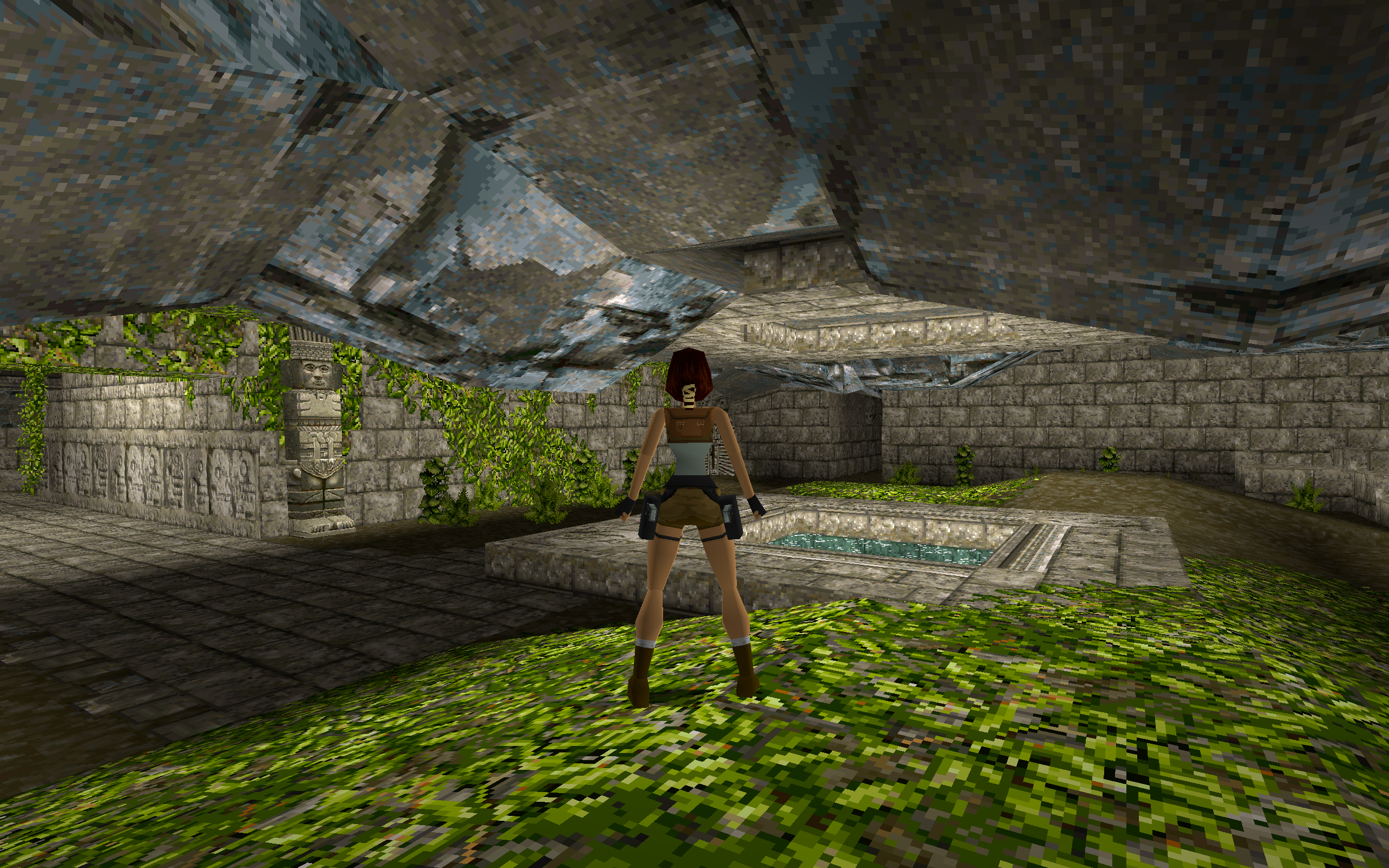
a 32 bit dual core cpu is probably way more powerful than the low-mhz scale one it originally ran on?
Tomb raider 1996 was a primary title for the Sega Saturn which used hitachi superH 32bit RISC processors at 28mhz and 2m RAM. A little more digging lists the minimum PC requirements for the DOS/win9x version to be a Pentium 60 and 8m RAM.
Not even counting that overall instructions per clock has increased tremendously since the 90s, yeah, there’s plenty of power in an esp32 at 400mhz lol
The ESP32 seems to even do more MIPS per Mhz that the original Pentium, so it’s even faster than a 400mhz pentium would be. Computationally at least
Edit: apparently the Pentium was actually much faster at 64-bit floating point calculations (ESP32 has to do 2 32-bit operations and combine in software), but I don’t think that’s an issue here
Guess it depends on how tomb raider was written. Even on 32-bit CPUs games like quake were still doing 64-bit math
This reminds me of very early mobile ports of this game for Pocket PC PDAs from 2002.
Allow me to geek out a little: The two least powerful of the officially supported devices - Compaq iPAQ 3630 and Toshiba e310 - feature a 32bit ARM-based RISC CPU clocked at 206 MHz, paired with 32 MB of RAM and a 240 x 320 display. The Toshiba cost $899 when it came out in October of 2002, equivalent to $1661 in today’s money (in other words, way too much for a kid who desperately wanted one back then).
Here’s the interesting part though: This CPU - the Intel StrongARM SA-1110 (yes, Intel used to license ARM CPUs)- has a TDP of less than 400 mW when clocked at 206 MHz. This is without RAM, of course, but still, this was a very power-efficient chip for the time - and it could take up tasks that were usually done by other chips, like acting as a softmodem.