

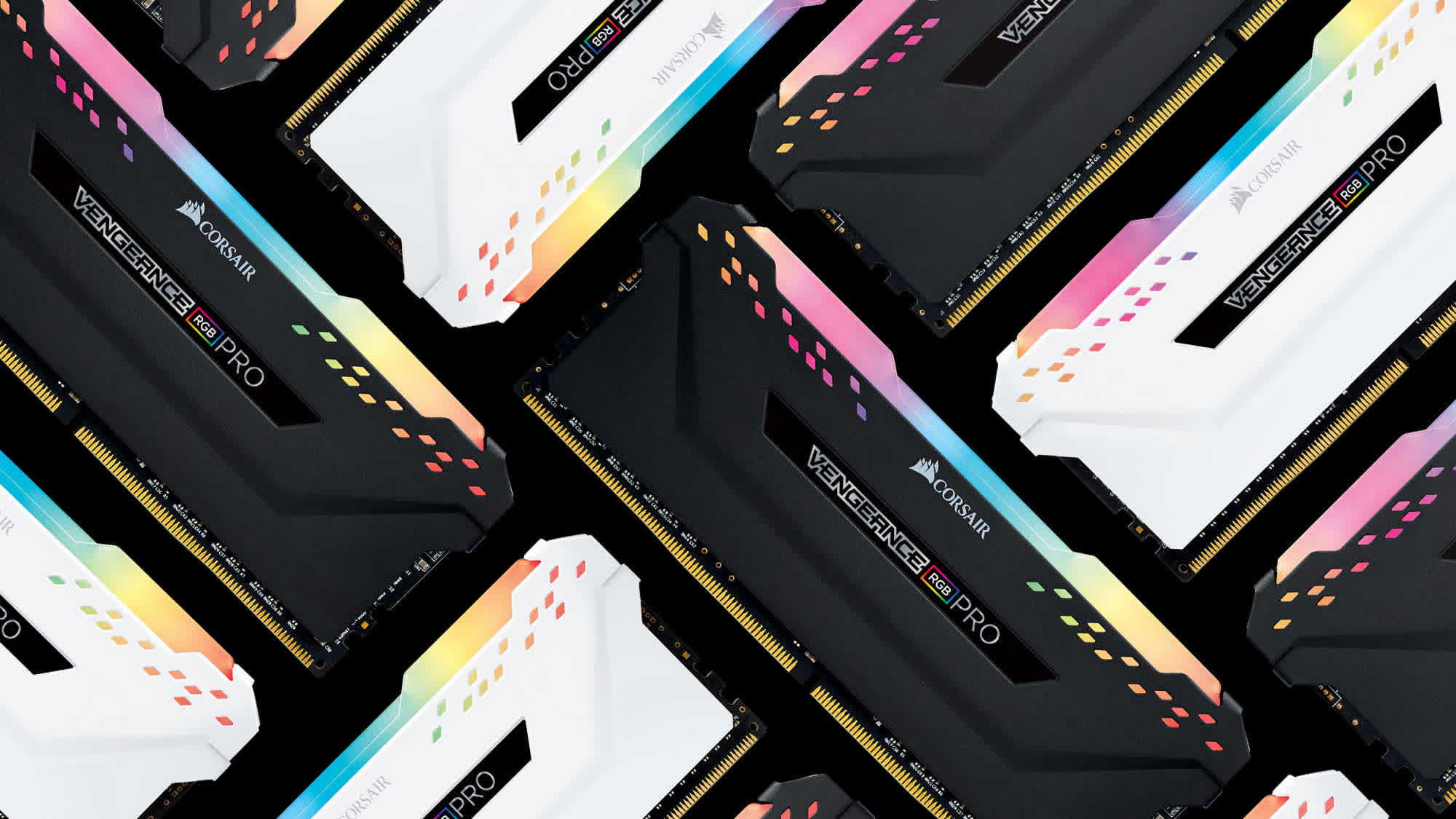
The whole situation sucks, but realistically DDR4 is still fine. I’m using it on the 2 best PCs in my house. The other computers use older shit. I can run modern games at 100+ FPS on a big screen and even in VR.
Anything past 60 is just pissing contest stuff. 99% of games are totally playable at 60fps. 120+fps is great and everything, but if it’s going to cost you 2k to get there, I mean you run your own journey but I’d be fine almost all the time at 60fps.
60 FPS is good for a flat screen, but 100+ FPS is better and I enjoy the vibrant fluidity of the games at those high framerates. I think I spent less than 2k on my PC but it has been a journey of upgrades over years so I’m not sure
60 FPS is NOT good for VR though. 90 FPS is the bare minimum for smooth 3D immersion with any modern VR system.
I think a large set of people hardly notice a difference past 90Hz (on flatscreen), but I find myself to be very sensitive to it.
When I play games where I need to be able to snap turn 180° in a tenth of a second and recognize what’s on my screen, 120Hz is a mandatory minimum to feel confident in the image. 165+ is where it starts to not matter as much.
60fps is like saying 640x480 resolution is enough and eyes can’t see more pixels, no need for HD.
TV movie at 24 fps, other content 25 or 50 fps. Sure, the TV is further away, less light in the faster light-sensitive corners. Still, in gaming, the FPS chase is likely artifically promoted by the vendors.
And then gamers talk about lagging (but anything after CRT smears), which displays a whole lot of misinformation/confusion in the audience. Which is mostly teens, which fiercely defend their convictions; a prime audience for campaigns.
No. No it is not. 60fps is totally fine for most things. Even great FPS’s can have excellent, snappy gameplay at 60fps.
There is more to responsiveness and crispness of the picture than just the framerate. An excellent gaming monitor that has minimal input processing time, virtually no ghosting at 60fps, and vibrant colors is going to feel WAY better than some cheap office monitor at 60fps. Especially if it has adaptive refresh rate.
It’s the ENTIRE reason CRTs were heralded as a wonderful gaming experience for the longest time until LCDs got good enough for humans to no longer notice the input lag, ghosting, and lesser color space of LCDs.
Only in the past handful of years have LCDs come out at reasonable price points that can even approach a good CRT.
BTW, my slowest monitor is a 120hz 1440p, so I’m not talking from cope.
I had plenty of fun playing Cyberpunk on my steam deck hooked up to a 1080p monitor running upscaled at around 30fps.
So did i playing duck hunt on NES
There’s a paper somewhere where researchers tested this. Some people discern higher frame rates, but many could not as the brain has a refresh rate of its own that analyzes incoming vision stream. At some point the brain won’t notice a difference because its only getting X snapshots per second, not a true live stream.
That’s a strange looking apple you’ve got there, friend.
When I upgraded my CPU to a Ryzen 9 5900X I did the research on DDR5 vs DDR4. I was considering a better version of the CPU that used DDR5 (I can’t for the life of me remember and I’m not searching just for this comment)
I decided to keep my ram but get a new MOBO and CPU. The performance gain from DDR5 was minimal for my use cases. The ECC would have been nice but that’s ok. I run memtest once a year and have only had ram die on me once.
Honestly, I’m pretty glad I comically overspec’d my 2020 build with a 5950X and 64gb ddr4. It’s been running like an absolute champ since I built it. I did shift from a 3080FE to a 9070 XT when I finally jumped ship from W10 to Bazzite, though. And there was a dead stick of ram that cropped up back in ‘23… I should probably go into my bios and tune the ram speeds down a bit to increase longevity, what with the price of memory these days.
I did something similar and hopefully my PC will survive until 2030.
I have no plans from upgrading from AM4 and DDR4, even before the prices went crazy. I don’t need to, my CPU isn’t even being used 100% during gaming.
You’ll run into CPU bottlenecks long before you get anywhere near 100% utilization. You’ll start seeing it around maybe 60% utilization on any specific core.
I don’t think I’ve ever seen 100% utilization across the entire CPU on any consumer PC’s use case. It would have to be a very specific set of things, excluding synthetic benchmarks.
If you’ve got a REALLY shitty CPU it’s not hard to max them out. We have some 11th Gen. i3s at work and windows update, or just installing stuff while doing anything else will peg the CPU.
Honestly my 5800x3d/128gb/4070ti ddr4 setup still just absolutely rips. Undervolted some of the cores way back when and it runs cool and just hammers whatever I throw at it. I used to traditionally do 4 year refreshes, but this builds doing time. I’m not even going to look at it until 2029/2030 now. And at these prices, if they are still like this, I’m all for PC gaming and everything but I’ll be in my late 40s then. I just don’t game as much anymore and the console/PC gap is so big right now for price/performance differences that I might just not even.
I’m just glad I never throw shit away or sell anything. I have a bunch of ram that I wasn’t using and now I’ve got some builds to do with them.
Hopefully the price will go back in time too
I just want a cheap ass SATA SSD ffs. Data centers can keep their fucking NVMe, I just want SATA. Please
Can someone that explain this to me? Why are companies choosing to make older parts available again instead of just making the new shit?
DDR4 slower therefore less demand from AI
Also run on older, cheaper process nodes that are not as volume constrained as high demand ddr5/hbm processes
The foundries still have the process in place for making DDR4, so since there’s demand they will keep making the product. It costs money to replace the machines in the facility to switch it to ddr5 or hbm, so the math only makes sense for a little while longer.
Because the factories are already set up to make DDR4. Retooling to make DDR5 will cost a lot of money and take a lot of downtime for which the factory isn’t making anything. So the companies are extending the life cycle of the DDR4 production lines, without needing to upgrade things or retrain workers. As long as people are buying it, then there’s money to be made by staying open.
It’s like being the burger restaurant next to the steak restaurant when the line for the steak restaurant is 3 hours long. You’ll get a lot of spillover from people who don’t want to wait, and you can benefit from that without necessarily turning into a steak restaurant yourself.
Wrong, memory companies have moved on to DDR5, they need to retool back yo to reproduce DDR4. The only problem is the semi fabs sold out of the ddr5 chips to AI companies for their builds.
Do you mean the actual packaging of silicon dies and putting them into DIMMs? Yeah, they had to revert back, but that’s because a lot of the memory silicon that’s only good for DDR4 never shut down, and any silicon memory that is good for DDR5 is also getting claimed up for non-DIMM memory (e.g., memory packaged with logic chips rather than sitting on its own package in a DIMM or even soldered to the board).
Basically, previous generations’ silicon fabrication tech is still going, and there are still buyers of that last generation product.
Because if they just make more of the new stuff then the AI companies will just increase their order size and take it all. Their greed knows no bounds
That sounds like an incentive for the manufacturers to do it, so is not an explanation.
Not if they know it is a bubble that will pop and then they are holding the bag on all of that capex spent on ramping up the production
That is not consistent with what the person above said. They contended that manufacturers don’t want to produce DDR5 “because AI companies will buy it all”. I’m saying that is an incentive to produce DDR5; manufacturers don’t particularly care who buys their products.
You say “it’s a bubble that will pop” and that’s a valid explanation for the behaviour, but it’s a different explanation than the OP’s: you’re not saying “yeah, they don’t wanna do it because they don’t wanna sell to AI companies” you’re saying, “they don’t wanna do it because the demand isn’t robust”.
Why would they not want to produce for a market that has like >5x the profit margins of consumer grade stuff? They can’t make enough.
Exactly.
AI is taking all the supply for the latest and greatest. All the production for DDR4 based stuff probably can’t do DDR5, so why not have it keep pumping out DDR4? It takes a LONG time to build out fabs for the latest and greatest so it’s not like they can switch to DDR5 stuff overnight.
They were still making smaller amounts. They’re just turning up production.
I got my 32gb DDR4 3600 for $60 2 years ago and four 2Tb NVME SSDs for $115 a pop last year.
The ram is now $335 and the NVMEs aren’t even in production anymore after they ran out of stock during the end of 2025 buyout. The closest equivalent is going from $400-$500 each these dsys.
As a gamer in a budget, how much performance am I missing by sticking to DDR4 in order to save costs? I’ve been trying to find info online, but it seems inconclusive - some places say it can net you like 20% difference, others that it has no significant difference, and I’m not sure which of the two is telling the truth. Same goes for performance in home servers.
The difference doesn’t necessarily come from the RAM itself, but that the best processors for gaming these days don’t support DDR4 anymore.
There are some differences, but real world applications, especially in the gaming space, are minuscule. You do almost touch on another important point; it’s hard to get benchmarks because you’re not going to find a processor that was made for both. Basically a single gen of intel is all we get. FWIW that gen showed a roughly 5% performance on a typical game, and 10% on a known memory intensive game. That’s 3 frames at 60fps, or ~7 frames at 144, and this assumes you actually need that last bit of performance.