

21·
5 hours agoHonestly, partly history. When I started, I wasn’t sold on KOReader yet, and the project began as a simple catalog just to push EPUBs easily onto my phone and my wife’s phone. Then I thought “why not read them right here”, so I built the PWA reader. Later I grew to really like KOReader, and that’s when I wrote the plugin.
But there’s also a real reason it’s not just KOReader-on-everything: my wife and I read in the browser (the PWA), not in KOReader. KOReader-sync only works between KOReader instances, and it only syncs the position, not reading time. I wanted the web reader in the loop, and stats too, so I needed something that bridges KOReader and a browser reader. That’s the whole point of the pivot format.
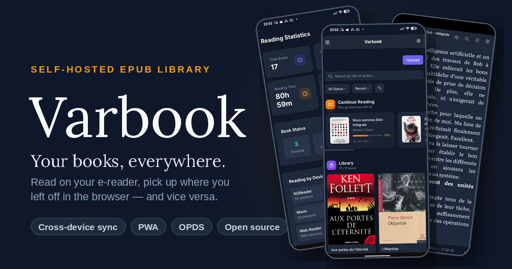
Okay folks, a word on the vibe-coding thing, since I can see it stirred up a lot and clearly rubs some of you the wrong way. Let me just drop a few numbers so you have an idea of what this actually is.
I started this project in February. I work on it mostly in the evenings, after my day job. Over ~4 months I estimate I’ve put around 100 hours into it. I use it every single day, and I’ve tested and optimized it quite a bit. So no, this isn’t some thing I threw together in 2 hours with zero investment.
Yes, I built it with AI in the loop. But without it, I’d never have had the time to make something this “polished” on the side. And honestly, why would I deny myself that on a personal project? When a carpenter builds a piece of furniture, I don’t hold it against him for using a power drill instead of a hand brace.
That’s it, just a small rant. I won’t engage with the AI criticism beyond this. Back to talking about the actual software for anyone interested. Cheers.